
"coffee bean contracts"
2000 article(s) found

Siphon pot coffee brewing video tutorial: how to correct and adjust the brewing parameters of siphon pot coffee
Professional coffee knowledge exchange more coffee bean information please follow the coffee workshop (Wechat official account cafe_style) to learn syphon (siphon coffee, stopper) for more than ten years, thinking that learning syphon is really a bitter time (with a lot of bitter coffee). Syphon is easy to learn but difficult to refine, the extraction rate is high, it is easy to boil and over-extract, and the stopping point is difficult to grasp, which is the most important.

Is there any medicine for coffee beans? how to make a strong coffee?
1. Effect on the central nervous system: caffeine, the main active ingredient of coffee, and its structural analogue theophylline have a strong central excitatory effect on coffee trees. But theophylline has a stronger effect and lasts longer than caffeine. People who take caffeine or drink caffeinated drinks often show that drowsiness disappears, fatigue is reduced, and the mind is quick. With the increase of the dose, the excitatory effect of the central nervous system becomes clearer.

Indonesia's Sulawesi Tonaga with high sweetness and 91 points of fine beans
High sweetness Indonesia Sulawesi Tona plus 91 points fine beans Indonesia SulawesiToraja Toarco good coffee is sweet, good beans make you miss for a long time after drinking! If you want to taste this bean, please follow the personal WeChat account 987911797 of morphine and leave a message. Bean information: Guojia: Indonesia production area: Sulawesi producer: Toyake Manor treatment method:

A brief discussion on the knowledge of Coffee beans Encyclopedia
1. Summary: coffee is a perennial evergreen shrub or small tree of Rubiaceae. It is native to tropical Africa and has been cultivated for more than 2000 years. The Arabs began to grow coffee in 525 BC, and it was popular for Arabs to stir-fry coffee beans. They began to grow coffee beans on a large scale after the 15th century, and were widely distributed in the tropics and subtropics of Europe, Asia, Africa and Latin America after the 18th century.

Coffee beans are important raw materials for making beverages
1. Summary: coffee is a perennial evergreen shrub or small tree of Rubiaceae. It is native to tropical Africa and has been cultivated for more than 2000 years. The Arabs began to grow coffee in 525 BC, and it was popular for Arabs to stir-fry coffee beans. They began to grow coffee beans on a large scale after the 15th century, and were widely distributed in the tropics and subtropics of Europe, Asia, Africa and Latin America after the 18th century.

Introduction to the unique and strong flavor of Costa Rican boutique coffee bean flavor manor
From 1870 to 1882, T. Guardia Gutierrez exercised dictatorship, weakening the power of the two families. Since the 1970s, British and American capital has infiltrated. American entrepreneur M.C. Keith signed a contract with the Costa Rican government to build a railway from Port Limon to San Jose on the east coast, won a concession in 1999 and occupied large tracts of land to develop banana plantations. United Fruit of America in 1899

Introduction to the characteristics, Flavor description and quality of Iron pickup and Arabica Coffee beans
Tieka Coffee introduces that this pure old variety of coffee has been growing for seven months, and next year, these seedlings can be provided to villagers in three nearby villages for planting free of charge. At that time, for every mu of coffee trees that survive, the villagers will be subsidized to plant 500 yuan to promote the development of the ancient coffee industry and let the descendants of the ancient coffee trees reproduce from generation to generation. For this, Qi Fenghua also led the villagers to increase their income and become rich.
Pu'er Coffee Capital: tea is Life Coffee is Business
In 2007, as an important post station on the ancient tea-horse road and one of the important producing areas of Pu'er tea, Simao City, Yunnan Province, was renamed Pu'er City, so that people can live up to its name. But according to this logic, in the near future, people are likely to call it the coffee market. Like many places in Yunnan, Pu'er gives people the first impression of those ubiquitous mountains. There is no good when the car passes through it.

How to use the Saifeng pot in the basic knowledge of making individual coffee?
Syphon, commonly known as "glass ball" or "siphon", is a simple and easy-to-use method of coffee brewing, and it is also one of the most popular coffee brewing methods in cafes. Although the Saifeng kettle has the alias of "siphon", it has nothing to do with the siphon principle, but uses water heating to produce water vapor, resulting in the principle of hot expansion and cold contraction, pushing the hot water from the lower sphere to the upper pot and waiting for the lower pot to cool.

What is the design principle and usage of siphon pot coffee? How to make siphon coffee?
Professional coffee knowledge exchange more coffee bean information please pay attention to the coffee workshop (Wechat official account cafe_style) siphon pot coffee design principles and usage? How to make siphon coffee? First, the history of the siphon pot in 1830, the earliest siphon coffee pot was invented by Loeff in Berlin, Germany. Improved by Vassieux in Lyon, France, in the 1840s, Shang Xia was born.

Description of the flavor of Yunnan small-grain coffee introduction to the characteristics of taste varieties in the producing areas
How to brew Yunnan small-grain coffee to describe the flavor of the producing area the characteristics of varieties are introduced. Yunnan coffee is produced by wet method, that is, peeling ripe coffee fruits after picking (generally required within 24 hours after picking). Fermentation (depending on the weather, air temperature, the number of the same batch of coffee fruits, usually 12-24 hours), washing (washing off attached to the coffee beans)
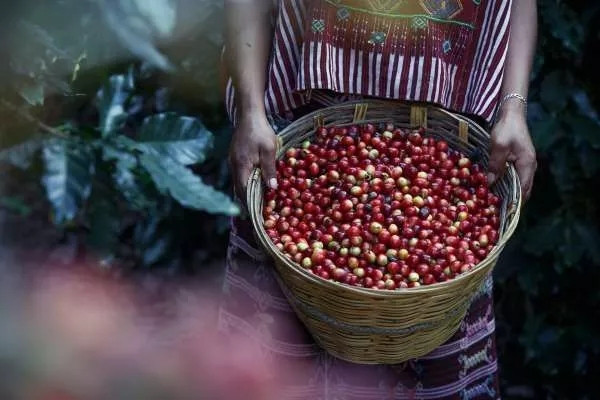
A somewhat unpopular but super-practical coffee term in Chinese and English.
Professional coffee knowledge exchange more coffee bean information Please pay attention to coffee workshop (Wechat official account cafe_style) Coffee as a drink from abroad, if you want to know more about it, you will inevitably be exposed to a foreign language. At this time, it is particularly important to understand the technical terms related to coffee! The following is a more comprehensive term for coffee, horse.

How to use a siphon coffee pot to make coffee
Siphon pot (Syphon), commonly known as "glass ball" or "siphon", is a simple and easy-to-use method of coffee brewing, and it is also one of the most popular coffee brewing methods in cafes. Although the siphon pot has the nickname of "plug wind type", it has nothing to do with the siphon principle, but uses water heating to produce water vapor, resulting in thermal expansion and cold contraction principle, push the hot water from the lower sphere to the upper pot, and then wait for the lower pot to cool.

Blessed again for boutique coffee lovers! % ARABICA expects to open a store in Shanghai by the end of the year.
The exchange of professional baristas please follow the coffee workshop (Wechat official account cafe_style).% ARABICA, a popular boutique coffee shop in Kyoto, announced on its Instagram on Aug. 22 that it has signed a contract with Chinese mainland and will enter Wukang Road in Shanghai in December this year. Its website announced that it will also open flagship stores in the Philippines, Qatar, Bahrain and other places in the same year. All over the world
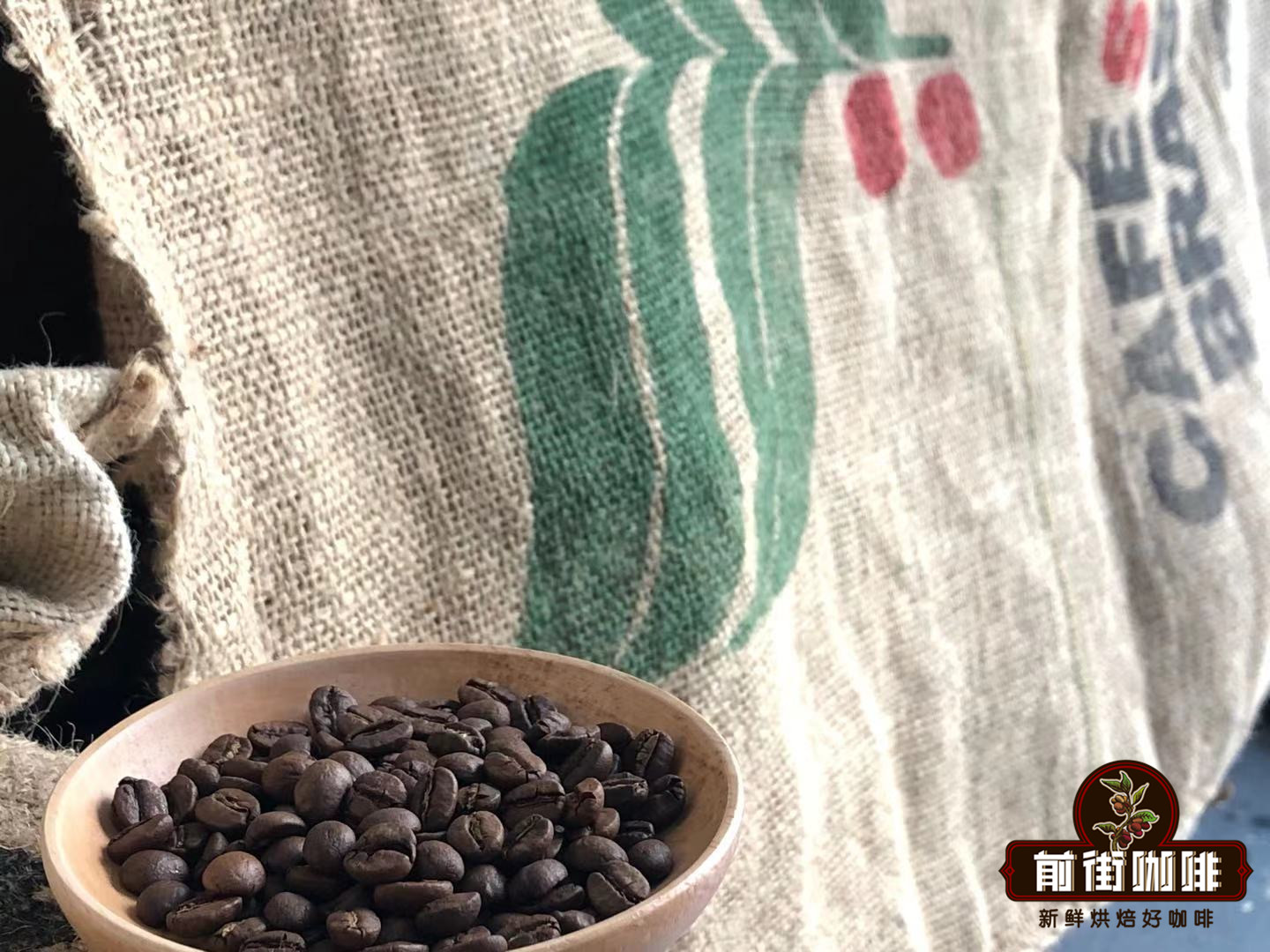
The improvement of coffee quality in Brazil has become the second largest source of coffee inventory on the ICE Exchange in the United States.
Professional coffee knowledge exchange more coffee bean information please pay attention to the coffee workshop (Wechat official account cafe_style) COVID-19 has had an impact on the lives and economies of people around the world, the world is looking for solutions to enable society to return to relatively normal as soon as possible. And despite all the negative effects of the pandemic, the sustainability of Brazilian agribusiness has made the country
A brief talk on the basic knowledge of Fine Coffee with Coffee beans
1. Summary: coffee is a perennial evergreen shrub or small tree of Rubiaceae. It is native to tropical Africa and has been cultivated for more than 2000 years. The Arabs began to grow coffee in 525 BC, and it was popular for Arabs to stir-fry coffee beans. They began to grow coffee beans on a large scale after the 15th century, and were widely distributed in the tropics and subtropics of Europe, Asia, Africa and Latin America after the 18th century.

Drinking coffee equals drinking calories? Know the calories of each major coffee before you order.
Professional barista communication please pay attention to the coffee workshop (Wechat official account cafe_style) after food intake is converted into calories, it is used to maintain the body's basic heartbeat, blood pressure and other metabolism, part of the energy will be converted into liver sugar, stored in the liver and muscles, helping muscles contract and maintain blood sugar balance in a short period of time. The extra heat is converted into adipose tissue, which is stored under or inside the skin.

Pacific Coffee Chinese website _ Pacific Coffee how to join Pacific Coffee
Professional coffee knowledge exchange more coffee bean information please follow the coffee workshop (Wechat official account cafe_style) 1. Project introduction Pacific Coffee (Pacific Coffee) was born in Hong Kong in 1992 and was acquired by China Resources in 2010, becoming its only coffee chain brand. In 2011, Pacific Coffee officially

Jamaica Coffee Estate Flavor Taste Introduction Atlanta Estate Jamaica Coffee Bean Characteristics
In 1717, King Louis XV of France ordered coffee to be grown in Jamaica. In the mid-1920s, Nicholas, governor of Jamaica, ordered coffee to be grown in Jamaica. Nicholas Lawes imported Arabica seeds from Martinique and began planting them in St. Andrew. To this day, St Andrew's is still Jamaica Blue Mountain Coffee

Analysis of homemade coffee: siphon pot
Siphon pot (Syphon), commonly known as "glass ball" or "siphon", is a simple and easy-to-use method of coffee brewing, and it is also one of the most popular coffee brewing methods in cafes. Although the siphon pot has the nickname of "plug wind type", it has nothing to do with the siphon principle, but uses water heating to produce water vapor, resulting in thermal expansion and cold contraction principle, push the hot water from the lower sphere to the upper pot, and then wait for the lower pot to cool.